You're standing in front of the tea shelf. One tin of green tea costs a few coins. The little pot of bright green powder next to it costs five times more. Same colour, same plant — so what gives?
Fair question. And the answer is genuinely interesting. Tea and matcha both come from the exact same plant, but almost everything that happens to the leaf after it's picked pulls them apart. By the end, you get two different drinks — different taste, different effect, different moment of the day. Here's how they split.
They Start as the Same Plant
Green tea, black tea, oolong, white tea, matcha — all of it comes from one plant: Camellia sinensis. What makes them different isn't the plant. It's what you do to the leaf.
Matcha and everyday Japanese green tea are especially close cousins. Both are green teas, both get steamed soon after picking to lock in that fresh colour. They part ways in two places: out in the field, a few weeks before harvest, and at the moment you either steep the leaf or grind it.
Difference One: Shade
For the last three to four weeks before harvest, the plants destined to become matcha get covered up. No direct sun. And that one move changes the whole chemistry of the leaf.
Starved of sunlight, the plant slows down and makes more chlorophyll (that's what gives matcha its almost electric green) and more L-theanine, an amino acid. L-theanine is the reason matcha tastes savoury and sweet — the quality the Japanese call umami. In a sun-grown leaf, a lot of that L-theanine would've turned into catechins, the stuff behind green tea's brisk, grassy edge. Shading keeps the sweetness and holds back the bitterness.
Sencha, on the other hand, grows in full sun. That's exactly why it tastes brighter, fresher, grassier. Neither is wrong. They're just the same leaf, shaped by how much sun it got to drink.
Difference Two: You Drink the Whole Leaf
This is the big one.
When you brew tea — sencha, hojicha, gyokuro — you steep the leaves, pour off the liquid, and toss the leaves. You only drink what the water managed to pull out. Everything else goes in the compost.
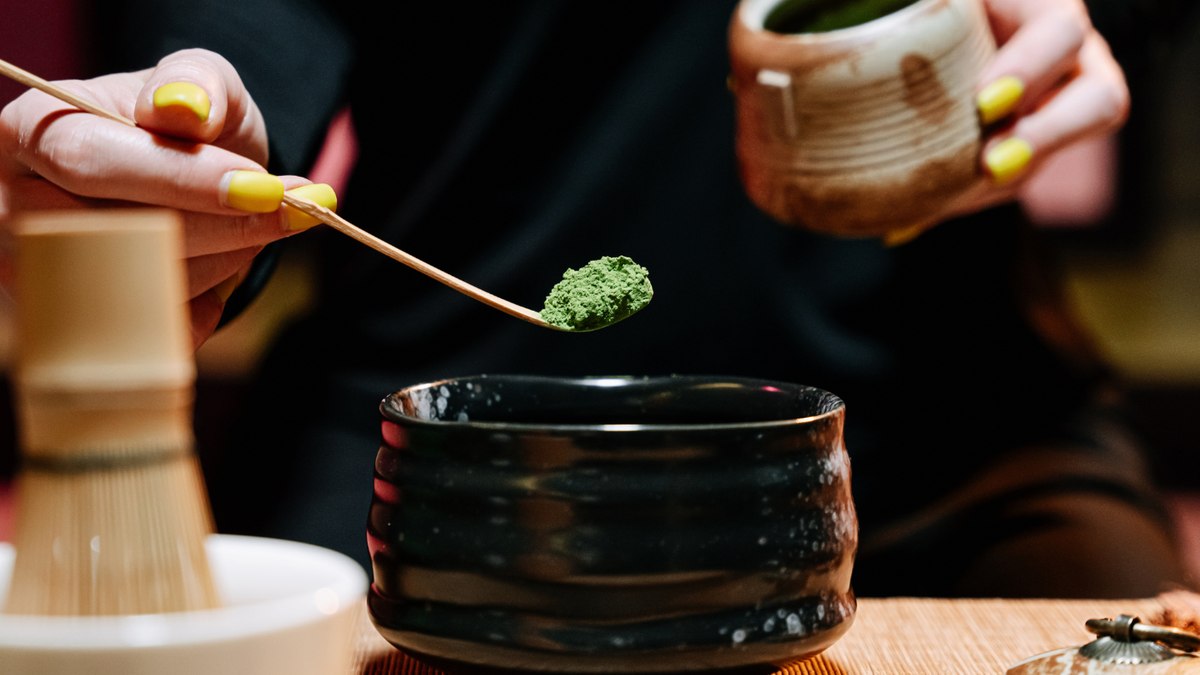
Matcha flips that. The shaded leaves get steamed, dried flat, stripped of their stems and veins, and then ground — traditionally on a slow stone mill — into a powder so fine it hangs suspended in water. You whisk that powder straight into hot water and drink the whole leaf. Nothing gets steeped out and thrown away. All of it goes into the bowl, and into you.
Why that matters so much
Because you're eating the entire leaf instead of an extract of it, a bowl of matcha gives you far more of everything — more L-theanine, more antioxidants, more chlorophyll, more caffeine — than a cup of steeped tea made from the same amount of leaf. It's more concentrated by nature, not by any trick. That's also why a little goes a long way, and why the powder shows up in such small tins.
What About Caffeine?
Both have caffeine. But they don't feel the same.
A bowl of matcha lands somewhere around 25 to 70 mg of caffeine — usually more than steeped green tea, but still way under coffee, which runs from about 85 to 200 mg. So matcha isn't the caffeine bomb people assume.
Here's the interesting part, though. In the leaf, caffeine comes packaged with L-theanine, and matcha has a lot of L-theanine. Research tends to describe L-theanine as promoting "relaxed alertness," and a lot of people find it takes the edge off the caffeine — energy without the jitters, and without the hard crash later. We're not making medical promises here. But that caffeine-plus-L-theanine combo is a real, well-documented reason matcha feels the way it does.
Sencha has L-theanine too, just less of it — partly because it's sun-grown, and partly because you're only drinking an extract, not the whole leaf.
Making Them: Steeping vs. Whisking
How you prepare each one comes straight from that leaf-vs-powder split. And this is where beginners trip up.
Brewing sencha
One rule matters more than any other: don't use boiling water. Boiling water scorches the leaf and drags out a harsh, bitter taste. Sencha wants water around 70–80°C (158–176°F). No thermometer? Easy — pour the just-boiled water into your cups first. That warms the cups and cools the water at the same time. Then tip it into the pot over the leaves.
Use about a teaspoon of leaf per cup. Steep for roughly 60 seconds. Then pour out every last drop, so the leaves aren't left sitting in water turning bitter. Good sencha gives you a second and third steep too — just nudge the water a little hotter and keep the time short.
Whisking matcha
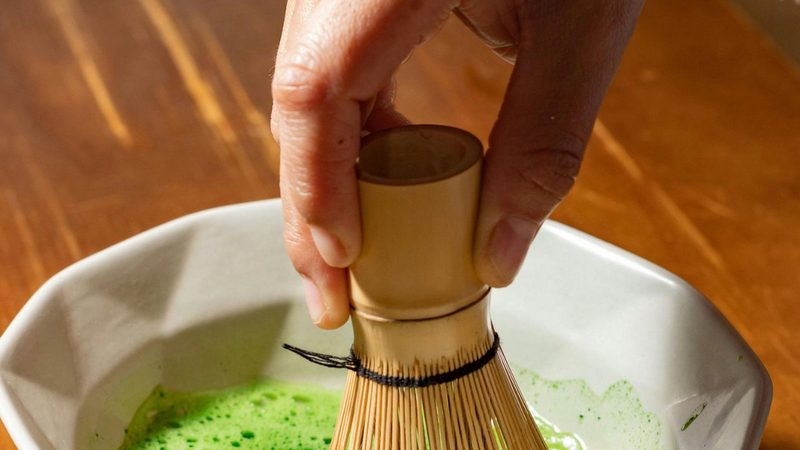
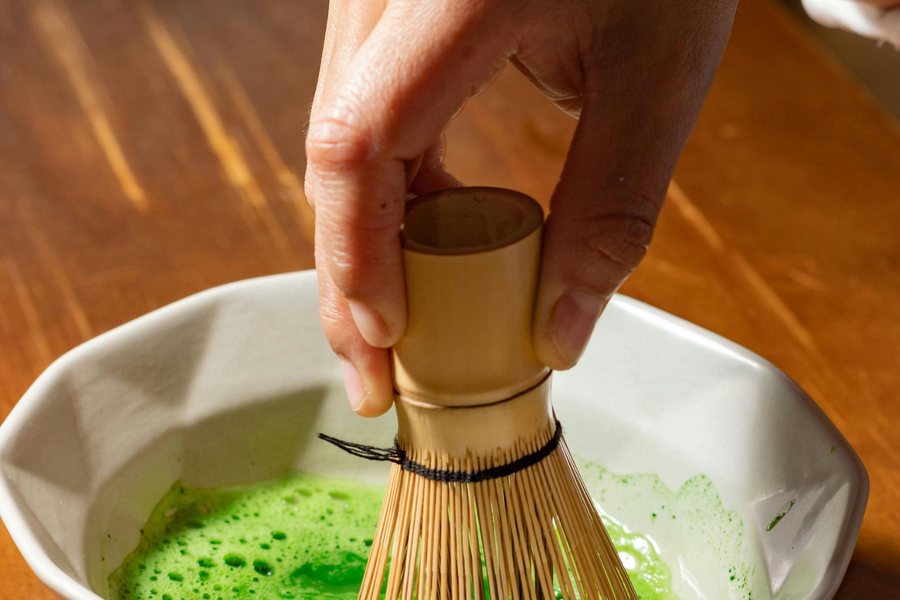
Matcha doesn't get steeped at all. First, sift a little powder into a wide bowl to break up the clumps. Don't skip this — the powder clumps easily, and nobody wants a lumpy bowl. Add a splash of hot water at about 80°C (175°F), then whisk briskly with a bamboo whisk in a light "W" or "M" motion until you've got a smooth, even foam on top. Takes seconds once you find the rhythm.
So Which Should You Drink?
There's no wrong answer here. They're just different tools for different moments.
Pick sencha (or another steeped green tea) when you want something light, clean, and easy to drink all day long, no fuss. Pick matcha when you want a slower ritual, a richer creamier taste, that calm-focus lift, and the full punch of the whole leaf.
And honestly? Most people end up keeping both — sencha for the working afternoon, matcha for the morning or the quiet pause that deserves a little more attention. That's the smartest move of all.